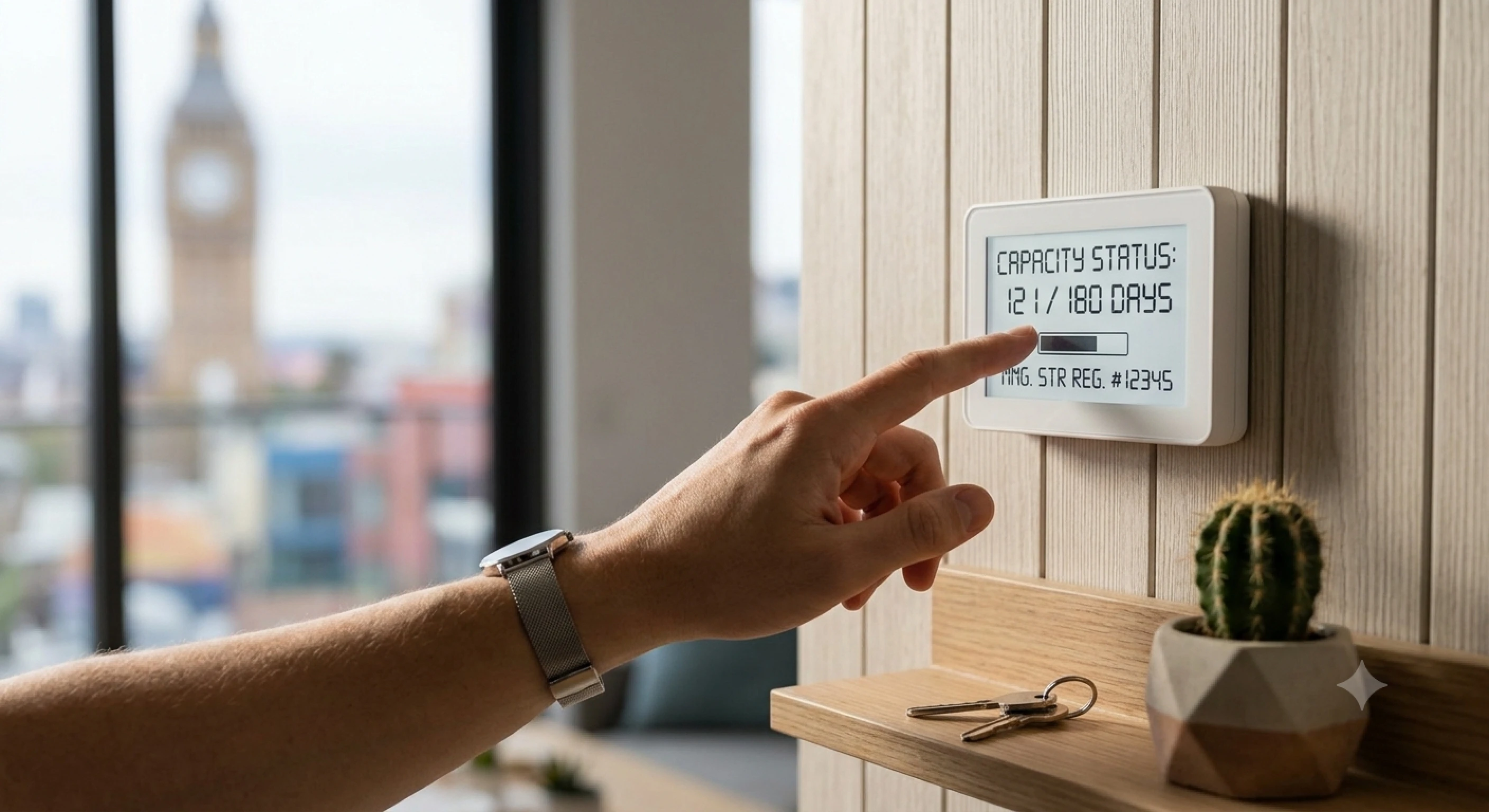
Non-hosted short-term rental accommodation in Greater Sydney is capped at 180 days a year. If you let a property on Airbnb, Stayz, Booking.com or any other platform without living there yourself, the cap decides how much of the year you can actually sell.
Here is how the cap works, where it applies, how the days are counted, and the ways owners work around it legitimately.
What the STRA rules say
The framework came into effect on 1 November 2021. Any short-term rental must be registered and comply with the fire safety standard. The Government defines short-term rental accommodation as a dwelling used by the host to provide accommodation on a commercial basis for a temporary or short-term period.
The rules split short-term rentals into two categories, and the distinction decides everything:
- Hosted — the host lives in the dwelling while guests stay. No day cap applies.
- Non-hosted — the host does not stay in the dwelling. The day cap applies.
Both categories must meet the fire safety standard and both must register on the NSW Planning Portal. Registration is integrated with the major booking platforms, which is how the days are monitored.
Where the 180-day cap applies
The cap on non-hosted letting applies in Greater Sydney — the Eastern Harbour City, Central River City and Western Parkland City — along with the Ballina area and certain land in the Clarence Valley and Muswellbrook areas. Non-hosted letting elsewhere in New South Wales is not subject to the 180-day limit.
Byron Shire is the exception worth knowing. Since 23 September 2024 non-hosted short-term letting there has generally been limited to 60 days a year rather than 180, with parts of Byron Bay and Brunswick Heads excluded from that cap. If you own in the Northern Rivers, do not assume the Sydney number applies.
Day limits can be changed by policy, so check the Planning Portal for the current position before you plan a year around it.
How the days are counted
This is the part owners most often get wrong. The 180 days are counted across a registration annual period — twelve months from the date you first registered — not the calendar or financial year. If you registered in March, your year resets in March.
Two things do not count against the limit:
- Bookings of 21 or more consecutive days by the same guest are exempt from the day cap.
- Periods you block out for your own use are not short-term letting, so they do not consume days.
The 21-day exemption is the one with real commercial value, and the strategies below are built on it.
If you are working out what the cap means for your returns, the Airbnb income calculator estimates nightly rates and occupancy for your suburb.
What happens if you exceed it
Short-term letting in these areas is permitted as exempt development on the basis that the day limit is observed. Go past it on a non-hosted property and the activity is no longer covered, which is a planning problem rather than a fine from the platform. The register and the booking platforms are connected, so the days are visible.
Working within the cap
Longer stays that fall outside the limit
Because a booking of 21 or more consecutive days by one guest is exempt, longer stays let you keep earning without consuming your 180 days. On Airbnb you can set a minimum stay under Listing Details, then Pricing and Availability, then Trip Length. Corporate relocations, renovations and medical stays all sit in this bracket, and demand for them has grown with remote work.
Six months short term, six months on a lease
Let the property short term through the high season, then put it on a residential tenancy agreement for the quieter half of the year. You get the peak rates when they are worth having and a steady income when they are not. A residential tenancy is a different legal arrangement with its own obligations, so take advice before switching.
Stay in it yourself
If you live in the dwelling while guests stay, the letting is hosted and no day cap applies. Owners who let rooms while living on site sit in this category. Alternatively, use the property yourself for part of the year and let it short term for the rest.
Questions owners ask
Does the cap apply per property or per owner? Per property. Each registered dwelling has its own day count.
Do the days reset on 1 July? No. They reset twelve months from your initial registration date.
Does a one-night booking use a whole day? The register counts days a dwelling is used for short-term letting, so short bookings consume the allowance quickly. This is why the cap bites hardest on city apartments doing two and three-night stays.
Is the cap the same across New South Wales? No — see above. It is 180 days in Greater Sydney and some regional areas, 60 days in much of Byron Shire, and unlimited elsewhere.
This is general information, not planning or legal advice. Check your own position on the NSW Planning Portal or with your council.
If you want the year planned around the cap rather than bumping into it, HomeHost manages Sydney short-term rentals and also handles long-term and hybrid arrangements. Get in touch or call 1300 17 17 18.
Related reading: The NSW fire safety standard for short-term rentals and How Airbnb works in Australia: an owner guide.